This is a subtitle for your new post
Coolant leaks can be sneaky. You might never see a puddle, yet the reservoir level keeps dropping, and the heater starts acting a little inconsistent. In many cases, coolant is escaping only when the system is hot and pressurized, then drying before it ever hits the ground.
The goal is to confirm whether you actually have a leak, then narrow down where it is coming from. A few simple checks can point you in the right direction, and they can also help you avoid driving the car when the coolant level is too low.
Why Coolant Leaks Can Be Hard To Spot
Cooling systems are designed to run under pressure. That pressure raises the boiling point, which helps the engine manage heat in traffic and on long drives. The downside is that weak seals and tiny cracks often leak only under those pressurized conditions, then stop when the engine cools down.
Coolant can also leak onto hot parts and evaporate instantly. You may only notice a faint sweet smell after you park, or a light crusty residue near a hose connection. That is why a leak can be real even if your driveway stays perfectly clean.
Quick Clues Before You Start Chasing Parts
Start with patterns. Does the level drop faster after highway driving, long idles, or hot days? Does the heater blow cooler at stoplights but warmer once you are moving? Those details can help narrow whether the system is low, pulling in air, or losing coolant under load.
Also, pay attention to any new residue or smells. A sweet odor after shutoff, foggy windows that seem harder to clear, or a wet spot under the front of the car after a long drive are all worth noting. This is also one of those problems that regular maintenance can catch early, before the leak becomes large enough to cause overheating.
Check The Coolant Level The Safe Way
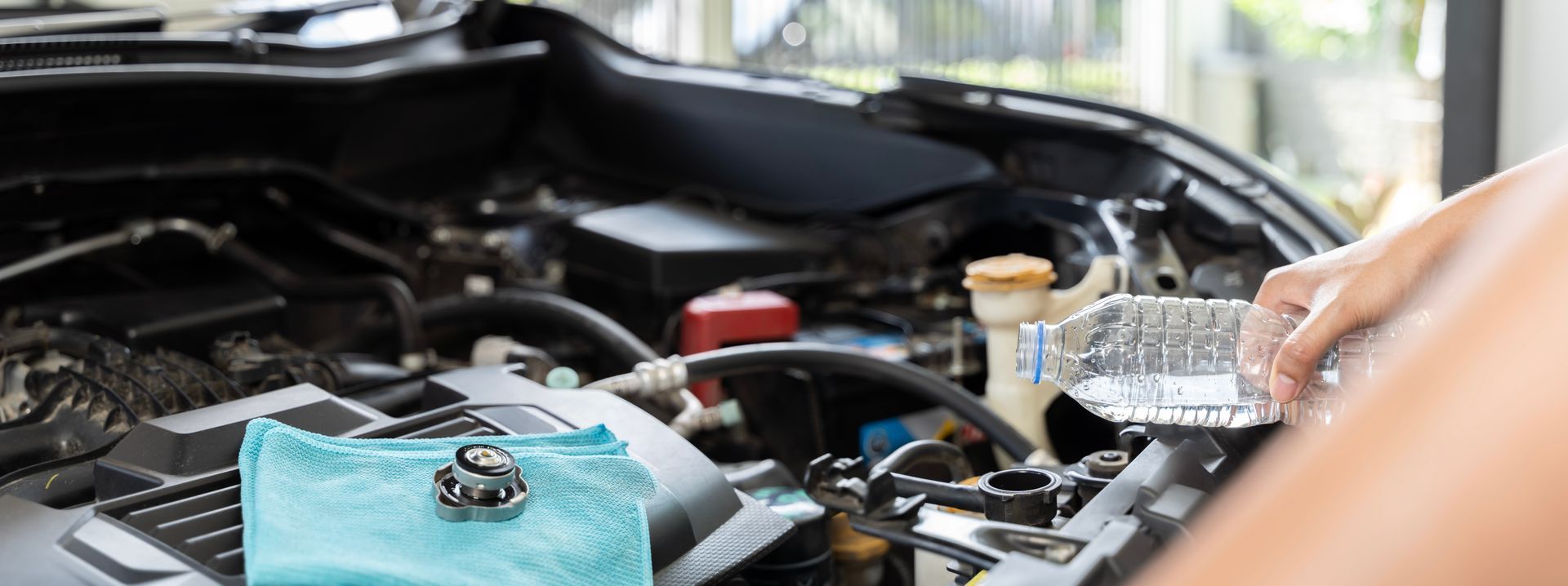
Only check the coolant when the engine is cold. Do not remove a radiator cap on a hot engine, because the system can be under pressure and can spray hot coolant. If your vehicle uses a reservoir with MIN and MAX markings, use those as your reference points.
If the level is below the MIN line, top it off with the correct coolant mix and keep track of how quickly it drops again. Write down the mileage and the amount you added. If you are adding coolant repeatedly, that is a strong sign you need the leak located instead of continuing to top off and hope it stabilizes.
Look For These Common Leak Locations
Most external coolant leaks show up around connections, seals, and plastic parts that see constant heat cycling. Look for crusty residue, dampness, or an area that stays cleaner than the dusty surfaces around it. That clean track is often where coolant has been washing dirt away.
Common leak spots include the radiator end tanks and seams, the upper and lower radiator hoses, the heater hoses near the firewall, the thermostat housings, and the coolant outlet flanges. Water pumps can leak from the seal area, and you may see residue on nearby parts or a damp trail below the pump. If you have an undertray, coolant may collect on it and drip from a completely different spot than the actual source.
Pressure Testing And Dye: How Shops Confirm A Leak
If the leak does not show itself in your driveway, pressure testing is the most reliable next step. The system is pressurized with the engine off so the leak can appear without engine heat blowing everything around. That makes it easier to spot a slow seep at a hose clamp, a hairline crack in a plastic housing, or a weeping pump seal.
UV dye can also help when leaks are tiny or hidden. Dye is added to the coolant, then a UV light reveals the leak trail, even if it is small enough to evaporate quickly. We’ve seen leaks that looked impossible to find until dye revealed a clear path along a hose junction or a seam that opened only under pressure.
When The Leak Is Not External
Sometimes the cooling system is losing coolant without any visible external seepage. In those cases, pay attention to subtle signs like persistent steam from the exhaust after warm-up, repeated bubbling in the reservoir, or a heater that goes warm-cool-warm as you drive. Another clue is coolant that looks oily or a dipstick that looks unusually milky, although many engines will not show that clearly, even with a problem.
This is not a reason to panic, but it is a reason to stop topping off endlessly and get the system checked. Coolant loss is manageable when caught early, and it is much harder on the engine when it is ignored until the temperature gauge starts climbing.
Get Cooling System Repair In Lyndonville, VT, and Manchester, MD, with Burke View Garage
If you’re losing coolant or you suspect a leak, the next step is to book service so the source can be confirmed and repaired correctly before it leads to overheating.
Schedule an inspection with Burke View Garage in Lyndonville, VT, and Manchester, MD, so the leak is handled at the source, and your cooling system stays dependable in traffic and on longer drives.